
Learning Enterprise
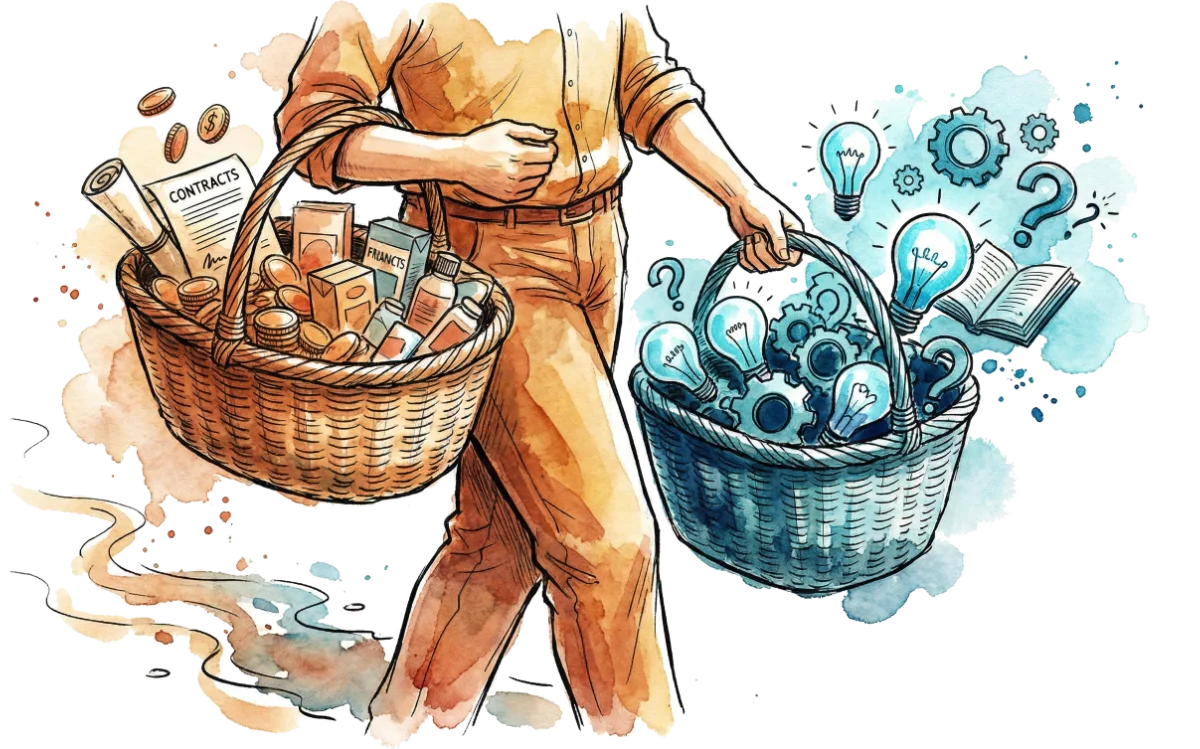
On the Hunt for Double Gain
As strong as the Tribe is, Colearning doesn't exist in a vacuum. We all need resources to live: a place to learn, tools, food on the table.
But Colearning doesn't want to depend on donations or permanent subsidies. We want freedom, not external dependency. Our central vehicle for autonomy and skill acquisition is the Learning Enterprise.
Hunt: Learning Through Entrepreneurial Action
In the language of our Framework, the Learning Enterprise is the tool with which we leave the protected Tribe and go on the Hunt. "Hunt" here doesn't mean aggression, but real projects and real value for customers.
The market is an incorruptible feedback provider. This immediate resonance – the success of the bounty or the pain of failure – creates enormous learning intensity.
Of course, Learning Enterprises need business plans, often smaller or larger investments. Usually a mixed-age team with various skills makes sense. Around the team, accomplices and customers must be found. Often the knowledge of experts is tapped. Research, experiments, and prototypes are needed, frequent trying, failing, and trying again.
Bounty: The Double Gain
Unlike the classical enterprise, profit maximization for individuals is not the focus here. We optimize for a double value:
- Entrepreneurial Gain: We create real value for others – whether a product or service that is sold, traded, or given away. This gain secures the project's economic existence.
- Learning Gain: Simultaneously, the competence of all involved grows. In a Learning Enterprise, everyone – teenagers and adults alike – understands themselves as learners. They venture into new territory, acquire skills, and reflect on their progress together.
From Market Revenue to Community Resource
Economically, the Learning Enterprise fulfills a vital function: It transforms market revenues into community resources.
An entrepreneurial gain is not kept private but brought back to the Tribe as bounty, shared and celebrated. Of course, those directly involved in the Learning Enterprise receive an appropriate share of the success. But not only successes are celebrated; defeats and losses are equally cushioned and borne by the Tribe.
The learning gain is also shared: The learning growth is not only experienced individually but made visible (e.g., through blogs, portfolios, or Treasure Sharing meetings) and shared in Colearning, so that the entire Tribe's treasure of experience grows.
The Learning Entrepreneurs train entrepreneurship: developing an offer that convinces customers and benefits the community. A third criterion is added: regenerative effect. Products and services should be designed so that they strengthen cycles – through durability, repairability, reusability, and careful resource use – or at least don't contradict them. With joy in making – serious in responsibility, playful in learning.
To see what this looks like in practice, read the stories of YOLU and the Mushroom Farm – and the Colearning Basecamp, where young people build their entire education journey around their own Learning Enterprises.
Further Reading & Sources
- Marco Jakob: Learning Enterprise (Development of the concept based on the Mushroom Farm).
- Fredi Zumbrunn: Learning Enterprise (Development of the concept based on the Mushroom Farm).
- Elinor Ostrom: What Grows When We Share (Commons economy).
- Christian Felber: Economy for the Common Good.