
Economy
In this chapter
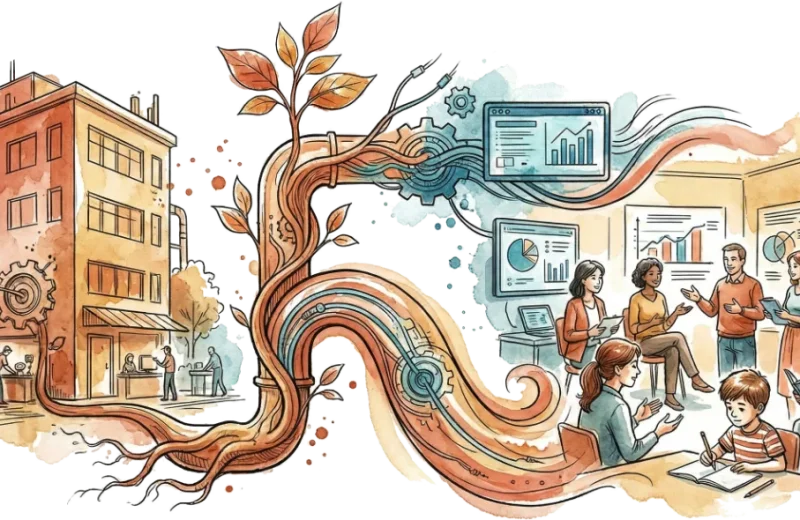
New Economy of Learning
Colearning economics flips costly education bubbles: learning back in real contexts instead of simulations and grade-driven motivation. Regenerative, not extractive – smartly using resources others treat as waste.
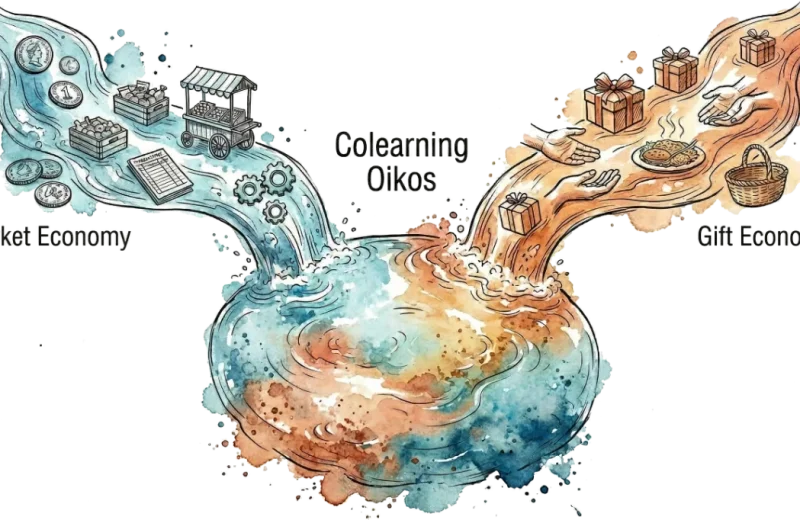
The Tribe as Oikos
Oikos over pure market logic: the tribe manages a shared household. Inside: gift economy and reciprocity; outside: market economy and learning enterprises – loot flows back. Security comes from sharing.

Steward Ownership: Committed to Purpose Long-Term
Purposeful ownership for learning enterprises: Steward Ownership locks in self-determination and an asset lock. The company serves its purpose, not speculation – profits strengthen learning, commons, and the tribe.

The Economy of the Incidental
How education gets cheaper: Colearning uses the “waste heat” of real life – learning emerges as a byproduct of real work. Age-mixing over supervision, incidental learning over simulation, shared infrastructure over learning factories. Regenerative through resonance and giving back.
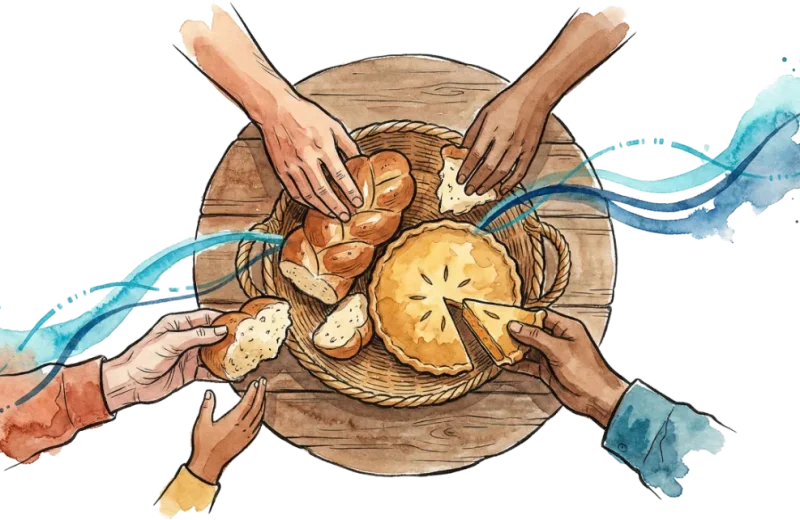
Lifting the Veil
Fairness in sharing the loot: success is collective. The tribe as an oikos negotiates “enough” with a ritual – lift the veil (open books, clarify contributions and needs) and close the veil to protect focus and flow.
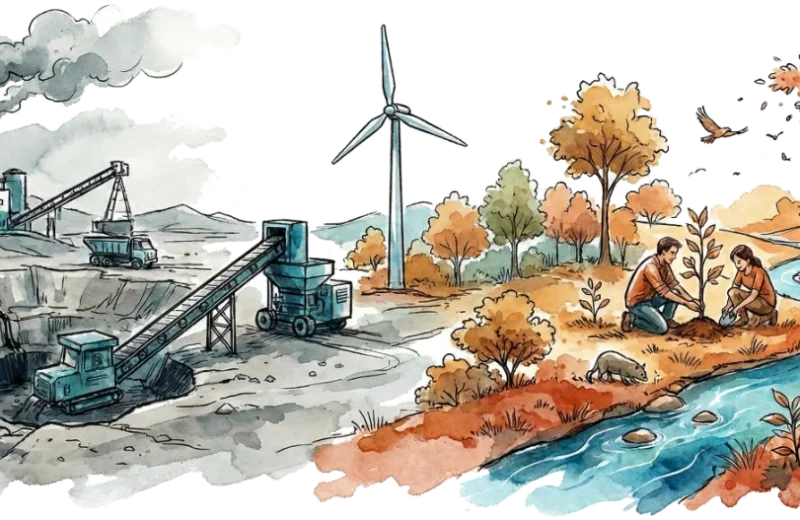
Regenerative Action
Beyond sustainability: Colearning aims for a regenerative economy – moving from extractive to net zero to net positive. Inspired by the Serviceberry logic: sharing strengthens cycles, resilience, and aliveness.