
Radical Autonomy
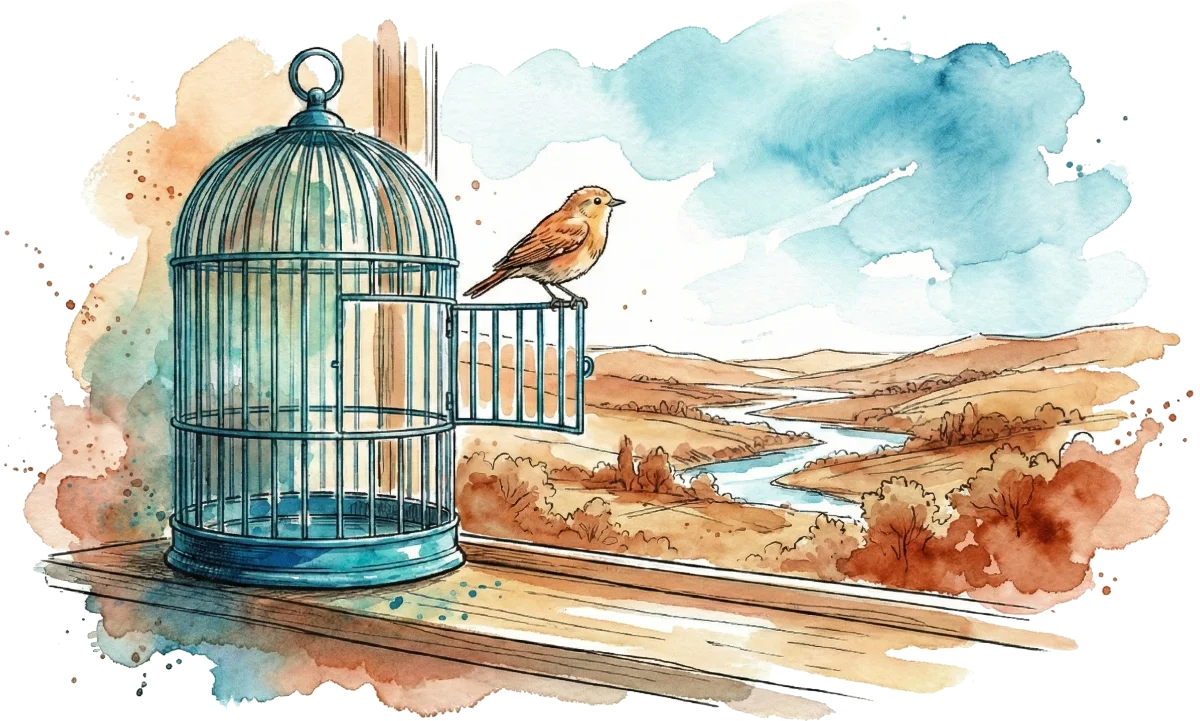
The Taboo of Interference
In original human communities, autonomy is not a privilege for adults, but a non-negotiable basic right for everyone. Even toddlers are treated as sovereign actors whose will one doesn't break. This means for our attitude:
- Non-Interference: It is considered intrusive to give another person – regardless of age – unsolicited instructions. We refrain from directing the will of others.
- No Manipulation: We regard people as "complete beings" who develop themselves. We don't manipulate them in a desired direction, but protect their space for unfolding.
- Trust, Not Laissez-faire: Radical autonomy is not neglect, but the highest form of respect. The message is not "I don't care about you," but: "I trust you to find your way – and I'm here when you need me."
The Path Out of Dependency
Since many people have been conditioned to instruction and obedience through the industrial school system, sudden freedom often triggers stress. Inclusion in Colearning means meeting people where they are and accompanying them into self-responsibility.
At the beginning, people receive more orientation through the community. The goal is "unlearning" trained helplessness. Through low barriers and permission to observe and pitch in, we enable safe docking until the muscle of autonomy is strong enough.
Further Reading & Sources
- Noa Lavi: Hunter-Gatherer Childhoods. (Hunter-gatherer cultures).
- Peter Gray: Free to Learn. (The evolutionary necessity of giving children control over their play and learning).
- Jean Briggs: Inuit Morality Play. (How Inuit upbringing works without reprimand and interference).
- William Stixrud & Ned Johnson: The Self-Driven Child. (Neuropsychological evidence that autonomy – "Sense of Control" – is the strongest remedy against stress and releases intrinsic motivation).
- Ivan Illich: Deschooling Society (On regaining autonomy).