
LOPI: Observing & Pitching In
Learning is Living
Before learning became its own system, it was simply part of life. People didn't learn in order to live later – they learned because they were living. They grew into what was happening around them.
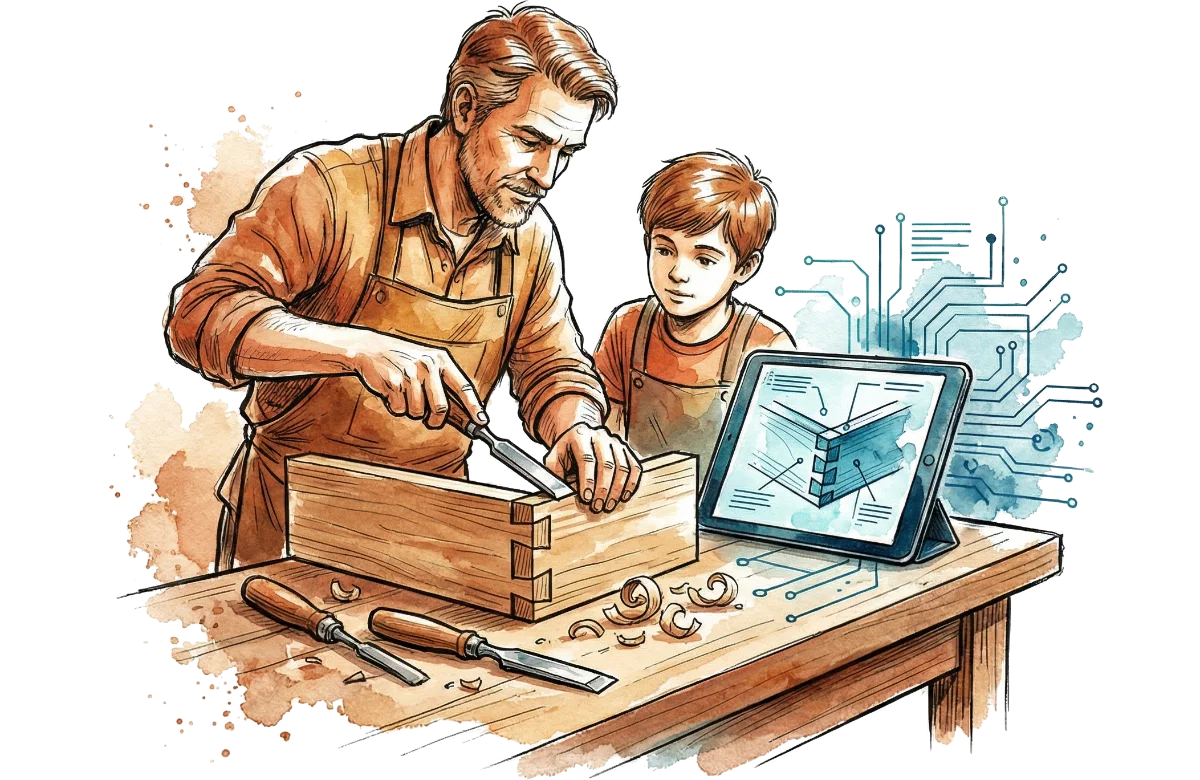
Learning research calls this original pattern LOPI (Learning by Observing and Pitching In). Humans learn by watching closely and contributing meaningfully: not as a simulation, but as a contribution to a real activity.
- Observing: Instead of being passively instructed, learners actively scan their surroundings. They perceive processes, movements, tones of voice, and priorities, essentially "stealing" know-how through precise observation.
- Pitching In: Learners don't stop at watching; they step in and make themselves useful. The driver isn't a grade, but the desire to be a valuable part of the community.
With this type of learning, we defuse the two tensions from the previous chapter:
- Inner Mismatch: By embedding learning back into everyday life and community, the brain no longer has to fight against its environment. The stress of artificial testing situations gives way to the deep satisfaction of being effective. Curiosity is no longer perceived as a disturbance, but as an engine. We heal the rift between who we are and how we learn.
- Outer Mismatch: Hunter-gatherers lived in a highly uncertain and dynamic environment. Their survival strategy was not rigid planning, but agile networking and decentralized autonomy. LOPI is a learning that is adaptable and constantly calibrates itself against real problems (instead of a curriculum). Thus, it handles complexity and dynamics far better.
LOPI is thus both at once: humanly coherent and future-ready.
Scientific Evidence
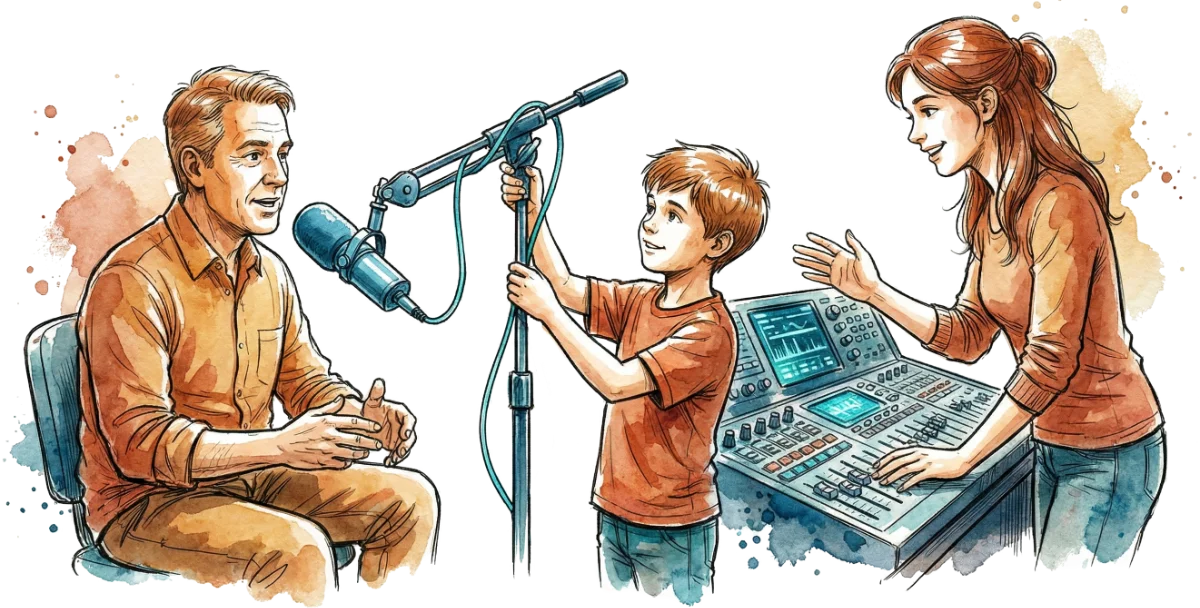
Empirically, this approach holds up: research on cognitive load and expertise shows that in complex environments (VUCA), knowledge can't simply be stockpiled "just in case." Neuroscience shows that learning in real contexts drastically improves transfer, while motivation research (Self-Determination Theory) confirms that agency and social belonging are among the strongest drivers of sustained skill growth. LOPI is thus not a pedagogical choice, but the neurobiological answer to the complexity of the present and future.
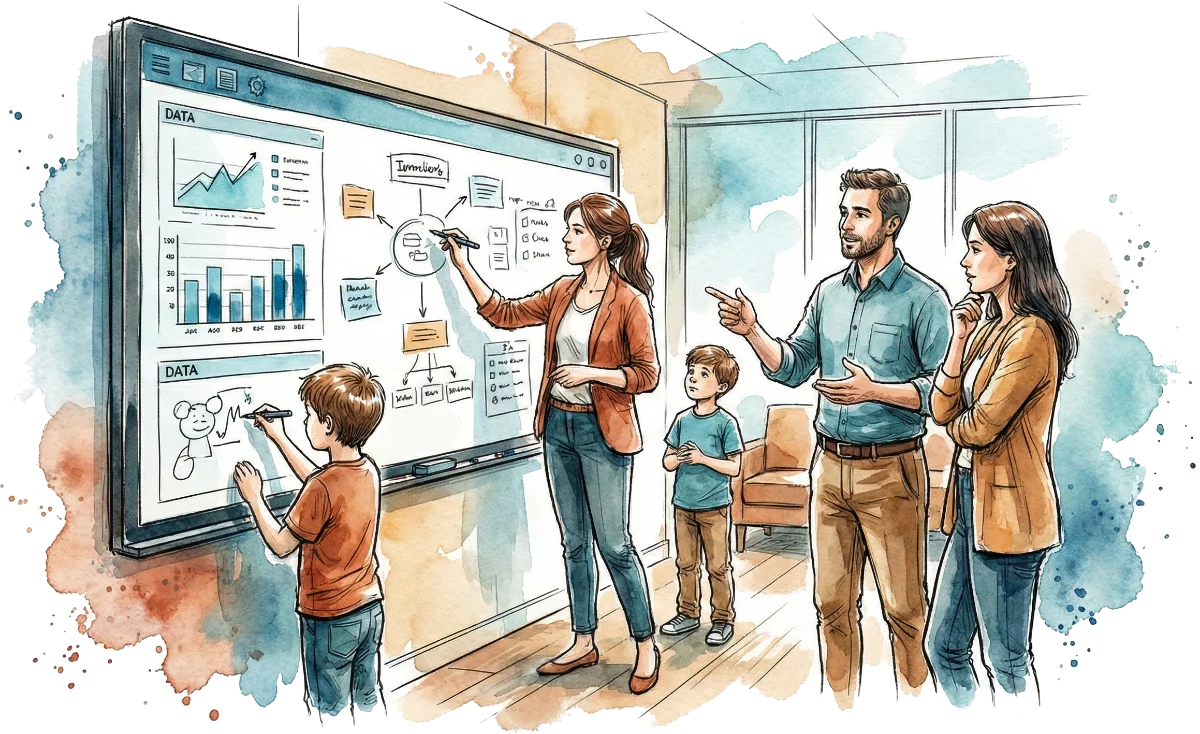
Colearning is LOPI for the 21st Century
Colearning is LOPI applied to the 21st century: an environment where observing is natural, and pitching in is possible and welcome at any age.
But this biological foundation is only half the battle. When we bring this ancient learning pattern into a world full of AI and algorithms, something new emerges that we urgently need: Futurability.
Further Reading and Sources
- Barbara Rogoff: The Cultural Nature of Human Development (LOPI as a learning principle, scientific basis for learning through observing and pitching in).
- Sheina Lew-Levy et al.: Research on Learning in Hunter-Gatherer Cultures (Contribution, autonomy, knowledge transfer)
- Peter Gray: Free to Learn (Evolutionary foundations of play and learning).
- Noa Lavi: Hunter-Gatherer Childhoods (Research on autonomy of children in hunter-gatherer cultures).
- Jean Lave & Etienne Wenger: Situated Learning (Legitimate Peripheral Participation as a bridging concept)