
Civic Resilience
Colearning as the Cultural Backup of the Community
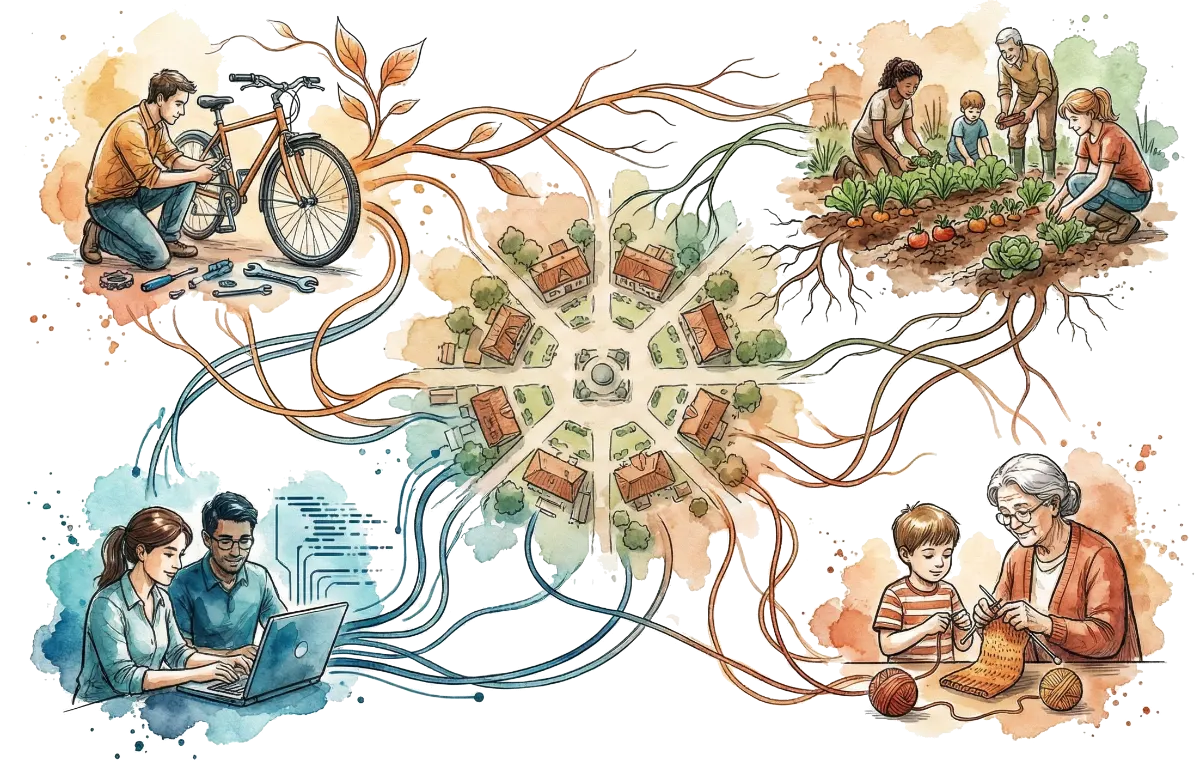
When we allow learning in the middle of life, more than just individual knowledge emerges. Civic resilience emerges – the ability of a community to deal with difficult situations and crises.
In a time of unstable global systems, Colearning functions as an essential social immune system (or as a social and cognitive operating system). It builds the civic resilience that steps in where industrial infrastructures fail by empowering people to remain autonomous and capable of collective action through local knowledge and craftsmanship.
This is specifically about physical and local independence:
- Repair & Crafts: Maintaining and repairing things instead of throwing them away (Circular Economy). → Story: The Repair Workshop
- Provision: Growing, processing, cooking, and distributing food locally. → Story: The Mushroom Farm
- Tech Sovereignty: Understanding and controlling digital tools instead of passive consumer dependency.
- Care & Culture: Moderating conflicts, providing care, building community.
Through Colearning, neighborhoods become modern villages of knowledge. Children and young people are not passive not-yet-adults in a holding pattern, but active co-creators, co-providers, and cultural backups. Learning and contributing concerns everyone. Adults and seniors find new roles as masters and mentors. They, too, pitch in on local value creation and keep learning continuously. The principle "Access before Efficiency" allows people of all ages to join in at any time.
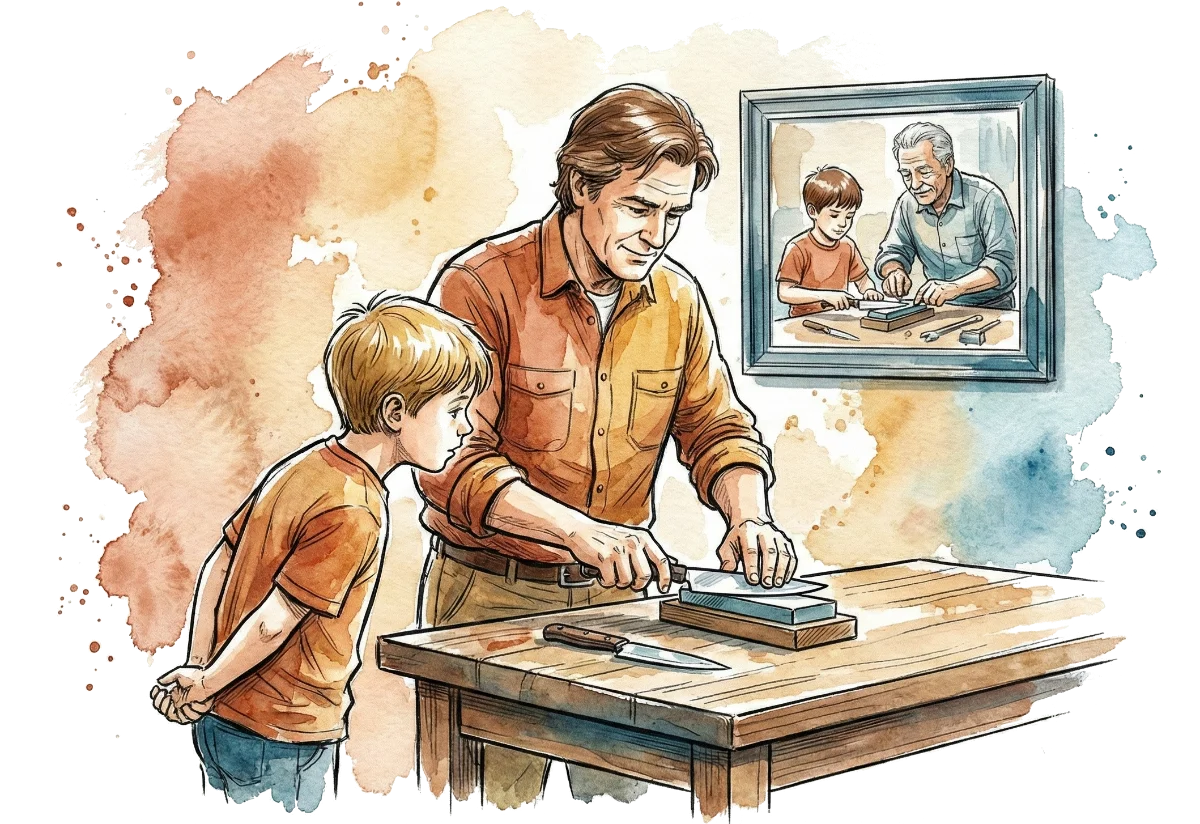
So the circle closes: because we learn in ways that correspond to our nature, we become capable of mastering the complexity of our time. We do not train consumers, but people who shape their environment effectively.
Resilience can't be crammed in once the shock has already arrived. It has to be lived beforehand – as a daily routine. That's why Colearning isn't a pedagogical niche, but central to the safety and quality of life of the whole community.
Colearning is social cohesion in action. When people work together, share, and care for each other across generations, more than competence emerges: Trust – the real foundation of civic resilience. Values aren't preached; they're practiced: in cooperation, conflict, repairing, cooking, deciding, and making things right again. In that friction, people grow – through encounters with themselves, with others, and with the challenge of discovering and shaping their surroundings. Democratic practice is a core part of this: the ability to hold differences, integrate perspectives, and make decisions that can carry.
Further Reading & Sources
- Marco Jakob: Back to the Future of Learning (Concept: Children as cultural backup, Ballenberg Principle, AI as tool).
- Ivan Illich: Tools for Conviviality / Deschooling Society (Convivial tools, learning networks, convivial places).
- Sheina Lew-Levy et al.: Research on Hunter-Gatherer Cultures (Children as co-providers and knowledge repositories).
- Aladin El-Mafaalani et al.: Children, Minorities Without Protection (Critique of the "pedagogical special environment").
- Nassim Nicholas Taleb: Antifragile (Systems that become stronger through stress – a characteristic of the "Hunt" in Colearning).
- Elinor Ostrom (Commons logic as a bridge to local value creation).