
TRIBE: Being & Safety
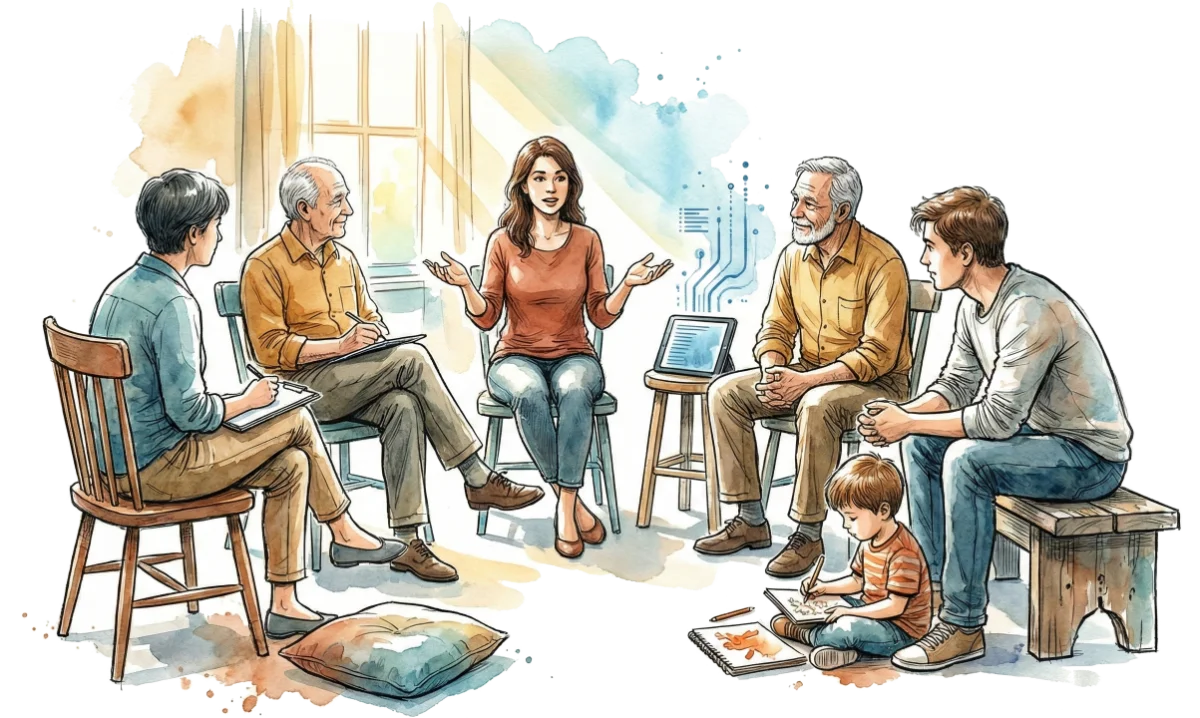
Core Statement: "I am seen."
Before we can perform, we must be allowed to be. The Tribe is the social ground of learning. At its core, it's about the deep need for belonging. Those who feel safe and secure in the Tribe have the courage to make mistakes and try new things.
Community: The Foundation of Resonance
It's about community, about seeing and being perceived. We use the greeting of the Na'vi: "Oel ngati kameie" – I see you. This means more than a glance; it is a recognition and appreciation of the other in their wholeness. Self-learning is a shy animal: It only comes when it's safe, and only stays when it experiences resonance.
Rhythms & Rituals
Culture emerges through what we do regularly. Rhythms are the invisible infrastructure that provides safety when external constraints fall away. They give togetherness structure without constraining individual freedom.
A healthy Tribe cultivates simple but powerful rituals: check-ins, breaks, games, and meals. Shared meals are humanity's oldest community-building ritual; they break down hierarchies and create space for informal exchange.
Typical Tools in the Tribe
- The Space: We design the Colearning Space so that encounter is inevitable (e.g., through central coffee machines or open zones), but retreat remains possible. The architecture itself must signal "Tribe."
- Mentoring: Mentoring often begins in the Tribe. It is the safe harbor where personal orientation takes place ("Where do I stand?") before setting out on the Hunt.
Anti-Patterns: When the Tribe Ails
For the Tribe to remain a productive ground and not end up in social dead ends, we need regular "culture checks."
| Anti-Pattern | Description | Check / Remedy |
|---|---|---|
| Cuddle Club | It's very cozy, everyone loves each other, but nobody leaves the comfort zone or takes real responsibility. | Check: Are there tangible results weekly? Action: Share results, e.g., in “Treasure Sharing.” |
| Exclusive Circle | A tight-knit group dominates; newcomers remain eternal spectators. | Check: Do newcomers have an active role after 2 weeks? Action: Buddy system for newcomers. |
| Harmony Compulsion | Conflicts are swept under the rug ("Good Vibes only"); tensions poison the atmosphere underground. | Check: Are there containers explicitly for tensions? Action: Regular retrospectives for "elephants in the room." |
Further Reading & Sources
- Baumeister & Leary (1995): The Need to Belong.
- Ryan & Deci (2000): Self-Determination Theory (Relatedness).
- Amy Edmondson (1999): Psychological Safety and Learning Behavior.
- James Cameron (2009): Avatar (Na'vi with the concept of "I see you").
- Caspar Henderson: A New Map of Wonders (On the power of rituals).