
Outer Mismatch: From the Blue to the Red World
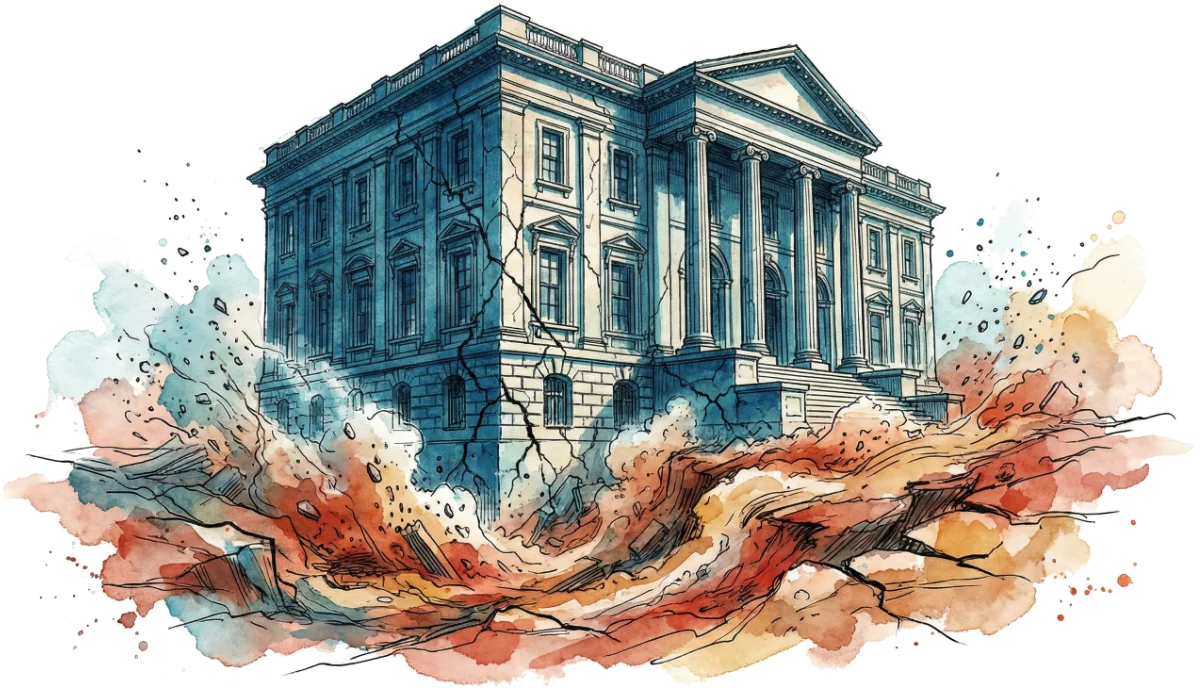
The Rules of the Game Have Changed
The inner mismatch isn't new – it has been part of the industrial model for about 200 years. For a long time, however, it was masked by a high external fit: the system delivered exactly the standardized behaviors an industrial economy demanded.
The education system was built for a so-called "blue world." It was the era of industrial stability and predictability. To understand this world, we must examine its architectural core: Taylorism.
The Old Logic (Taylorism)
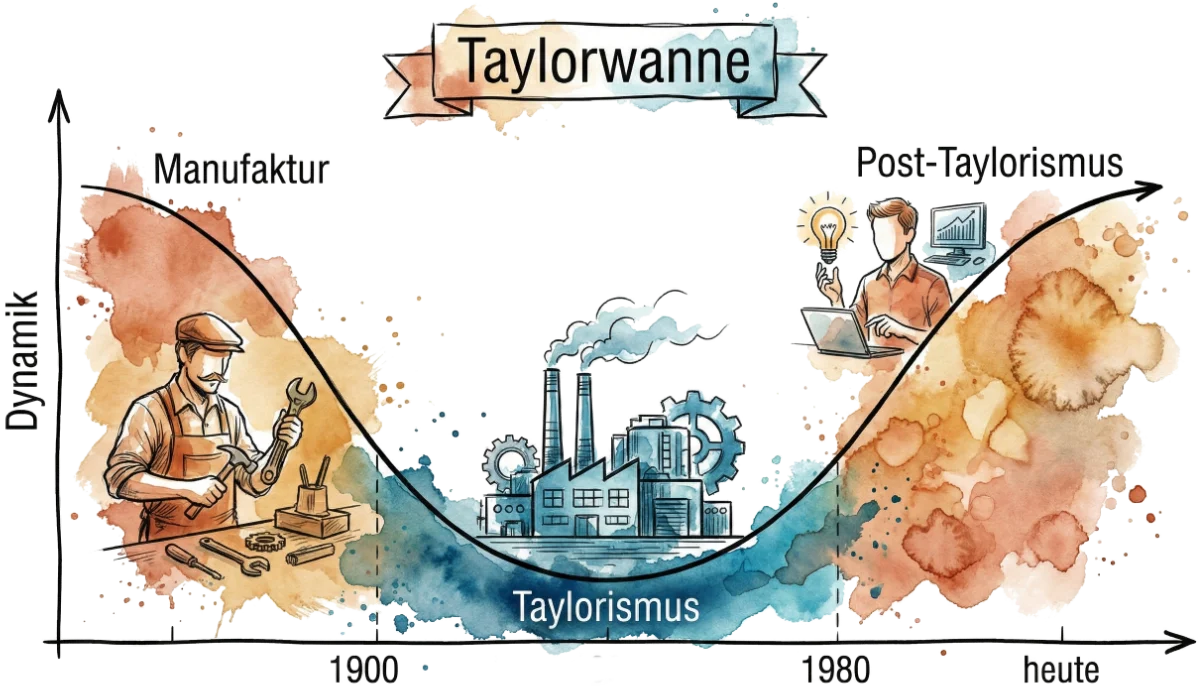
Frederick Winslow Taylor revolutionized industry around 1900 with "Scientific Management." His goal was maximum efficiency in mass production. His method was radical: the strict separation of thinking (planning/management) and doing (execution/workers). Complex craft processes were broken down into tiny, standardized steps that almost anyone could perform without much prior training. The person at the machine didn't need to be creative or solve problems; they needed to function reliably.
The factory's winning formula became the blueprint for education: students as raw material, the curriculum as assembly line, exams as quality control. It was about efficiency and repeatability. The goal was to produce a normed human – someone who follows instructions and functions smoothly in hierarchical structures. The inner mismatch (unfreedom, alienation) was masked by external promises (security, career, stability).
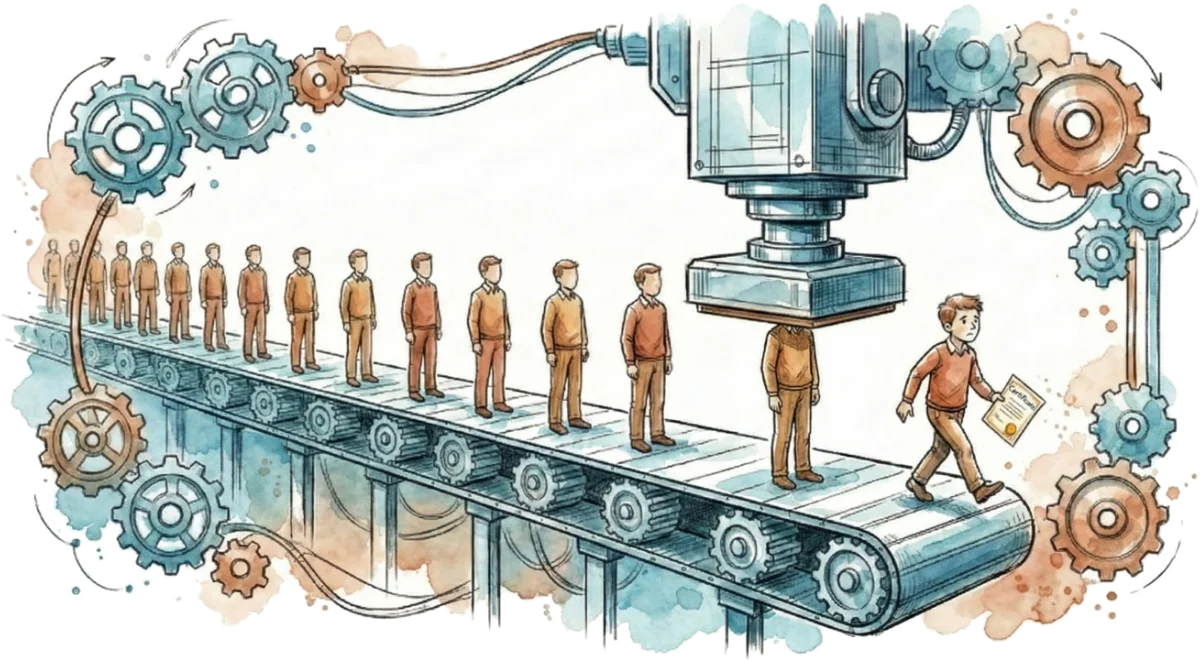
This arrangement still shapes education today, but under changed conditions it's becoming a problem for everyone involved: it overwhelms, makes people sick, renders them powerless, and grinds them down. So we try to patch and modernize the model without noticing that the model itself is outdated.
The New World
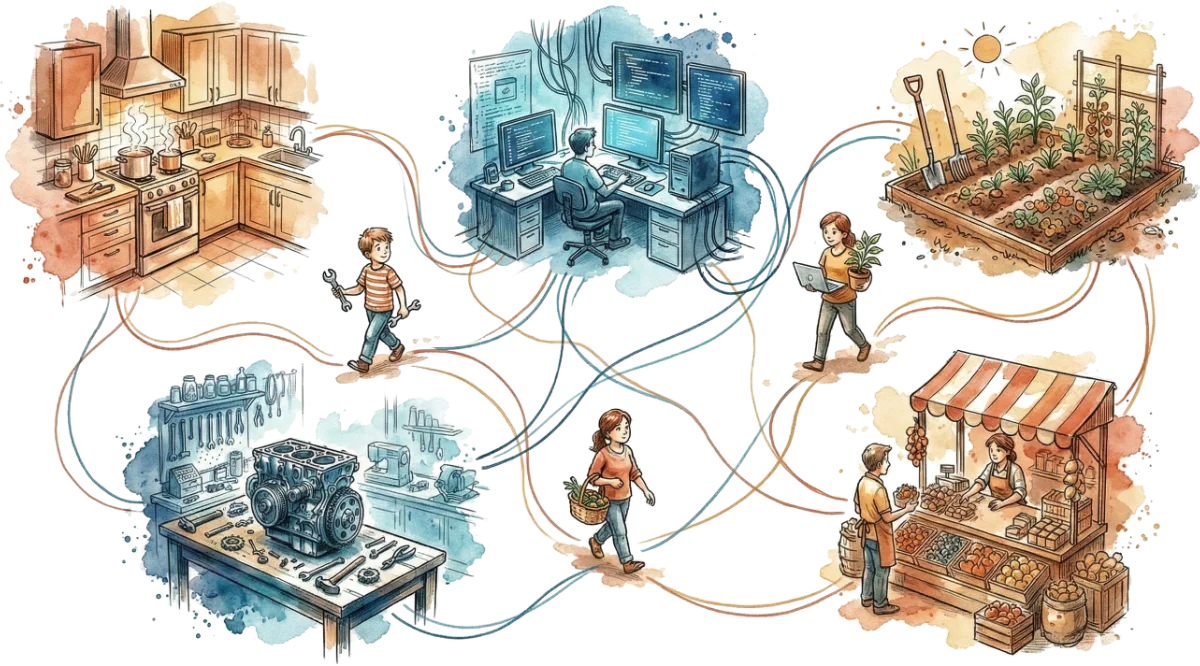
We now mostly live in a "red world": volatile, uncertain, complex, and ambiguous (VUCA). Markets, technologies like AI, and geopolitical conditions change far faster than standardized curricula. Here, a fundamental law of systems theory applies (Ashby's Law): Only variety can master variety. The old logic fails because it replaces diversity and creativity with control and conformity. This makes people lose exactly the capabilities they need in a complex world.
In the red world, rigid just-in-case knowledge becomes a burden. The only viable strategy is "just-in-time" learning: accessing knowledge at the moment of need.
Colearning – through self-learning in community and its decentralized structure – cultivates the capabilities needed to respond to change (dynamic robustness). It replaces a central plan with an adaptive network that can respond to unpredictable challenges. At the same time, Colearners develop high adaptability and agency.
System Comparison – Education and Learning in the Blue World vs. the Red World
| Dimension | Industrial Education (Blue World) | Colearning (Red World) |
|---|---|---|
| Goal | Standardization & Norm Fulfillment | Dynamic Robustness & Resilience |
| Knowledge Form | Just-in-Case (Stockpile Knowledge) | Just-in-Time (On-Demand Knowledge) |
| Structure | Hierarchical | Networked |
| Error Culture | Error Avoidance & Punishment | Errors as Data Points & Learning Opportunities |
| Social Form | Homogeneous Age-Grouped Classes | Heterogeneous, Mixed-Age Teams |
| Control | Push Principle (Curriculum Pushes) | Pull Principle (Interest and Need Pull) |
| Economy | Certificates & Grades | Reputation & Artifacts |
Further Reading & Sources
To deepen the systemic backgrounds of these topics, we recommend the following concepts and authors:
- Gerhard Wohland: Thinking Tools for High Performers. (Introduction of the terms "dynamic robustness" and the distinction between blue/static and red/dynamic worlds, Taylor Basin).
- Marco Jakob: School in the Taylor Basin. (Transfer of the economic model of the Taylor Basin to education).
- Ivan Illich: Deschooling Society. (Classic critique of the institutionalization of learning and plea for self-determined educational networks).
- W. Ross Ashby: Introduction to Cybernetics. (The "Law of Requisite Variety," which explains why only variety can meet a complex environment).
- Hartmut Rosa: Acceleration and Resonance. (Sociological analysis of modern time dynamics and the search for vital ways of relating to the world).
- Nassim Nicholas Taleb: Antifragile: Things That Gain from Disorder. (About systems that benefit from volatility and disorder – a core principle of the "Hunt" in Colearning).
- Barbara Rogoff: The Cultural Nature of Human Development. (Scientific foundation for learning through observation and genuine participation/LOPI).
- Stefan Bauschard: Education Disrupted: Teaching and Learning in An AI World (Examination of radical AI acceleration challenging traditional educational paths and demanding a reorientation toward volatile job markets and craft resilience).
- Christoph Schmitt: Expedition, Not Safari. When School Development Becomes a Shared Departure. (Blog post on learnflow.city from 15.07.2025).