
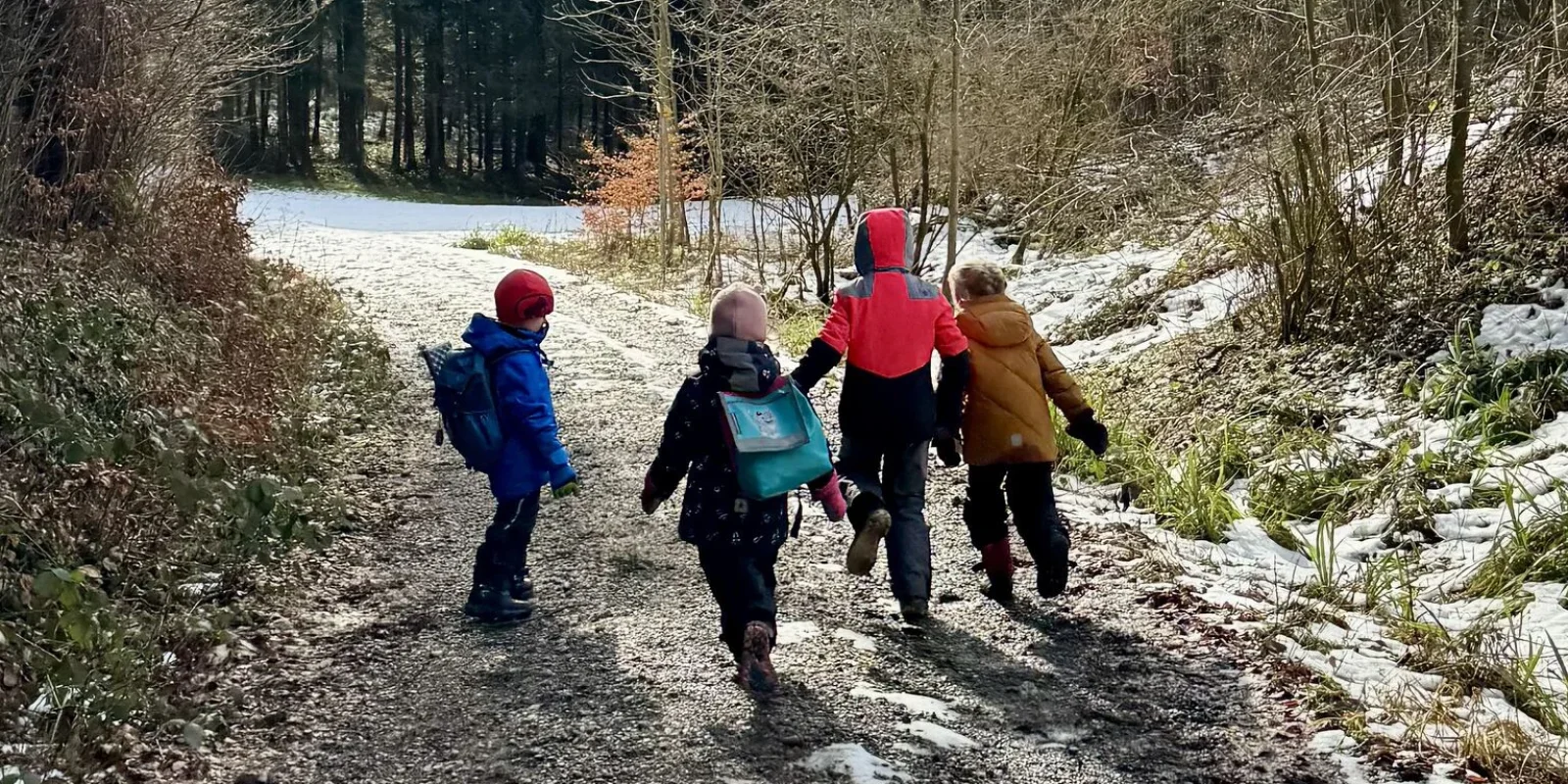
In Rikon in the Töss Valley (near Winterthur), Jonatan and his wife Steffi have transformed their house, their garden, and the surrounding forest into a learning space. They bring Colearning back to its most original environment: the family, the garden, and the neighborhood.
Outdoors: Co-Regulation at the Fire
Nowhere does the Learning by Observing and Pitching In (LOPI) work as naturally as outdoors. An example from practice shows the power of wordless leadership: A group of 20 children and teenagers arrives in the forest. There's chaos, shouting, restlessness. An old-school teacher would now blow a whistle and explain rules. Jonatan does the opposite. He says nothing. He simply starts organizing backpacks, stretching a tarp, and lighting a fire. He cooks. The effect is astonishing: Bit by bit, the children dock in, come to the fire, help with the wood, and become calm. This is co-regulation through modeling. Nature and the real activity structure the group, not the timetable.
In the Töss Valley, no "learning situations" are simulated. The seasons set the tasks.
- Harvesting & Processing: When the lavender blooms, no worksheet about lavender is filled out. You sit in the sun for an hour, separate blossoms from stems, smell, feel, and process the harvest. Jonatan calls this Slow Learning – deep immersion in a real action.
- Building & Sleeping: The "hunt" can mean building a night camp under a tarp and sleeping outside – with all the sounds and the real cold of the night. Here children, teenagers, and adults learn to face their fears and gain trust in their own resilience. "Being outside is different every time," says his 6-year-old daughter. Nature prevents routine and forces constant, alert adaptation.
Indoors: High-Tech and Craft
But the principle of "observing and pitching in" doesn't end at the patio door. Inside, other tools await, but the attitude stays the same.
- Tech Sovereignty: A 16-year-old colearner wants to print a sweater. Jonatan has a plotter but doesn't know how to use it. Instead of lecturing, he becomes an accomplice in not-knowing. Together they use ChatGPT and YouTube tutorials, fail on tests, and celebrate success when the print works. The "hunt" for the solution takes place digitally here.
- Craft & Symbols: An old sewing machine doesn't sit in the cupboard but ready to use on the table. It's an invitation (affordance). A child naturally starts sewing because the tool is available and they see it used by others. Or "owls" are baked because a story was read – the impulse comes from the moment (pull), not from the plan.
Whether at the campfire or at the laptop: The adults are learning cultivators and thus "gardeners of curiosity" who enable real tasks. And they are colearners who themselves dive into learning.
Radical Economy: Presence Instead of Money
Economically too, the learning place takes new paths (see chapter above on the economy of giving). Instead of high fees, the currency is presence. The adults pay with their life time. Parents aren't customers who drop off their child, but become learning cultivators. They garden along, cook at the fire, or learn something new themselves – and thus enable the operation. Jonatan and Steffi forgo wages and cover only the costs for food and materials. This relieves the system from financial pressure and creates maximum relationship density (Tribe).